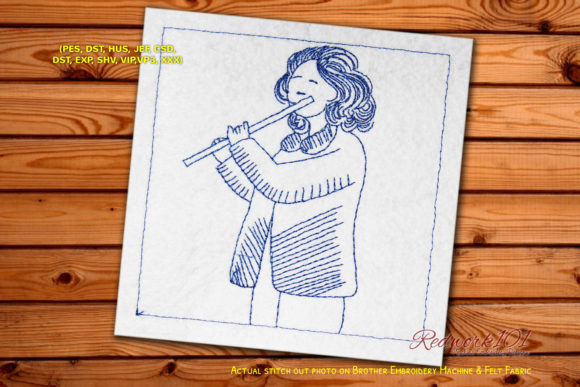
Review: Young Girl Playing Flute Redwork for Merch
As an embroidery designer who has spent years digitizing and testing files for commercial use, I approach every new machine embroidery design with a critical eye. It is not just about whether the image looks cute on a screen; it is about how that design performs when stitched out on real fabric, under the stress of daily wear, and within the constraints of a small business budget. Today, I am reviewing the Young Girl Playing Flute Redwork design to determine its viability for branded merchandise, staff uniforms, and boutique product lines.
This specific design falls under the Music category, featuring a classic redwork style. For those unfamiliar, redwork traditionally uses a single color thread—historically red—to create outline-based imagery. In modern commercial applications, this technique is prized for its simplicity, speed, and clean aesthetic. The product description notes that the Box Stitch shown in promotional pictures is optional and often appears in a different color unless it is integral to the design itself. This flexibility is a crucial detail for professional decorators, as it allows for customization based on brand colors.
First Impressions: Visual Personality and Brand Fit
The immediate impression of the Young Girl Playing Flute Redwork is one of elegance and nostalgia. It feels handmade, classic, and gently playful without being overly childish. For a small business owner, this visual personality is a powerful asset. It does not scream "corporate"; instead, it whispers "artisan." This makes it an excellent candidate for brands that want to project warmth, creativity, and approachability.
If you run a music school, a boutique instrument shop, or a creative studio offering lessons, this design aligns perfectly with your brand identity. It suggests a connection to traditional arts and disciplined practice. However, its appeal extends beyond music-specific businesses. A bakery with a vintage theme, a florist focusing on rustic arrangements, or a bookstore hosting community events could all leverage this imagery to add a touch of whimsical sophistication to their small business merch.
Performance in Real Business Applications
When evaluating a digital embroidery file for commercial use, we must consider where it will live. Here is how I see this design performing across various product categories:
- Embroidered Patches: This is perhaps the strongest application. Redwork designs translate beautifully to patches because the open spacing prevents the fabric from puckering. You can create iron-on or sew-on patches for customers to add to jackets or bags, creating a high-margin add-on product.
- Apron Embroidery: For cafes or craft studios, placing this design on the chest pocket of an apron adds a personal touch. The single-color nature keeps the look uniform and professional, even if staff members wear different colored aprons.
- Tote Bag Design: Canvas totes are staples for retail shops. The Young Girl Playing Flute Redwork works well here because the outline style complements the coarse texture of canvas without getting lost. It serves as a subtle brand mark rather than a loud graphic.
- Cap Embroidery: Use caution here. While possible, the curved surface of a cap front can distort detailed outlines. If used on a cap, I recommend keeping the size modest and ensuring the design is centered perfectly to avoid visual imbalance.
For custom apparel like work shirts or polo uniforms, this design acts as a sophisticated accent. It is not a bulky logo that weighs down the fabric; it is a delicate detail that invites closer inspection. This increases the perceived value of the garment, making it feel like a premium finished product rather than a generic uniform.
Technical Considerations for Production
While the aesthetic is strong, the technical execution requires attention. As a designer, I always advise running tests before committing to a large production run. Here are the critical factors to monitor with this specific file:
Stitch Density and Fabric Texture: Redwork designs typically have lower stitch density than fill-stitch designs. This is generally good for speed and fabric hand-feel, but it means the underlying fabric texture will show through. On dark uniforms, a single light thread may not provide enough contrast. You might need to use a thicker thread or adjust the thread colors to ensure visibility. Always test on the actual fabric you intend to use.
Stabilizer Selection: Because this is an outline design, proper hooping and stabilization are vital to prevent shifting. Use a cut-away stabilizer for garments that will undergo frequent washing, such as staff t-shirts or aprons. For tote bags or patches, a tear-away might suffice, but a cut-away ensures long-term durability.
Hoop Size and Scaling: The product description mentions an optional box stitch. If you choose to include this, ensure your hoop size accommodates the full dimensions. If you skip the box, verify that the remaining design elements are balanced. Do not scale the design down too small for tiny patches, as the fine lines of the flute and the girl’s features may merge or break, losing definition.
Enhancing Brand Identity and Customer Trust
In the world of commercial embroidery, consistency is key to building trust. Using a cohesive set of design assets helps customers recognize your brand instantly. The Young Girl Playing Flute Redwork can be part of a larger collection of music-themed or artistic motifs. When used consistently on packaging inserts, thank-you cards, or as a watermark on printable mockup images for your online store, it reinforces a narrative of care and craftsmanship.
For Etsy sellers and handmade brands, this design adds a layer of authenticity. Customers buying handmade goods are often looking for a story. An embroidered motif that suggests music, art, and tradition tells a story of cultural appreciation and skill. It elevates a simple tote bag or shirt into a keepsake item, thereby increasing buyer engagement and reducing price sensitivity.
Practical Designer Notes for Implementation
- Test in Black and White First: Before choosing fancy thread colors, stitch the design out in black thread on white fabric. This reveals any gaps in the digitizing or awkward jumps that might be hidden by color choices.
- Check Commercial Licensing: Always confirm the license terms included with the embroidery file. Ensure you have the right to use the design on items for sale, not just for personal use.
- Create Client Mockups: If you are doing this for a client, create a digital mockup showing the design on their specific garment. This manages expectations regarding size and placement.
- Evaluate Contrast: If stitching on dark fabrics, consider using a metallic or high-sheen rayon thread to make the redwork pop, or switch to a contrasting color that matches the brand palette.
- Inspect Spacing: Look closely at the distance between the girl’s fingers and the flute keys. Ensure these areas do not pull together during stitching, which can happen on stretchy fabrics.
In conclusion, the Young Girl Playing Flute Redwork is a versatile and charming addition to a professional decorator’s library. It bridges the gap between decorative art and functional branding. By understanding its technical requirements and leveraging its nostalgic aesthetic, small business owners can create memorable, high-quality merchandise that resonates with their audience. Whether used on a musician’s gig bag, a barista’s apron, or a boutique’s gift wrap, this design offers a timeless appeal that supports both brand identity and product value.