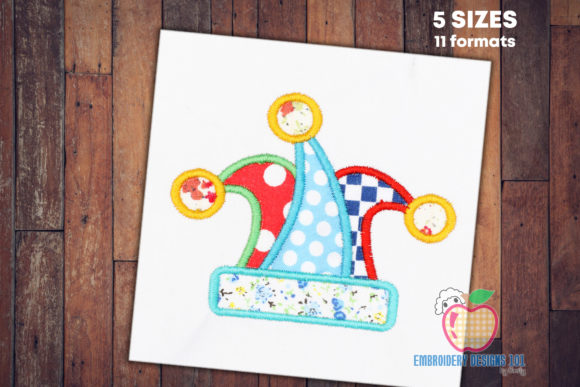
Jester Hat Applique: A Designer’s Review
As an embroidery designer who has spent years digitizing and testing files for commercial use, I approach every new machine embroidery design with a critical eye. It is not just about whether the design looks cute on a screen; it is about how it performs under the needle, how it holds up after washing, and most importantly, how it serves the brand identity of the small business owner using it. Today, I am reviewing the Jester Hat Applique, a playful yet structured design that sits firmly in the Accessories category of Embroidery products. This review is tailored for small business owners, Etsy sellers, apparel decorators, and merch creators who are considering adding this file to their library of design assets.
First Impressions: Playful Professionalism
The first thing that strikes me about the Jester Hat Applique is its balance between whimsy and clarity. In the world of branded merchandise, "playful" can sometimes translate to "amateur," but this design avoids that pitfall. The applique technique inherently adds a layer of texture and dimension that flat stitching cannot achieve. This gives the finished product a premium, handmade feel that customers often associate with higher value. For a boutique, a creative studio, or a local bakery looking to inject personality into their staff uniforms or customer gifts, this design feels friendly and inviting without sacrificing professional presentation.
The visual personality here is bold and decorative. It does not try to be minimalist, nor does it clutter the fabric with excessive detail. Instead, it relies on strong shapes and clear color blocks. This makes it an excellent candidate for businesses that want to stand out. Whether you are running a pet brand with a quirky voice or a florist shop that loves vibrant aesthetics, this design aligns well with brands that are not afraid to show character.
Real-World Business Applications
When evaluating a digital embroidery file for commercial embroidery projects, I always ask: "Where does this live on the product?" The Jester Hat Applique is versatile, but it shines brightest in specific applications. Here is how I see it performing in real business scenarios:
- Embroidered Patches: This is perhaps the strongest use case. Applique designs work beautifully as iron-on or sew-on patches. You can produce batches of these hats on felt or twill, cut them out, and sell them as standalone accessories or add-ons to tote bags and jackets. This allows for efficient production since you can hoop a large piece of fabric and stitch multiple designs at once.
- Staff Uniforms and Aprons: For cafés and boutiques, staff apparel is a walking billboard. An apron embroidery featuring this jester hat on the chest pocket or upper left chest creates a recognizable uniform. It adds a touch of fun to the work environment, which can boost staff morale and customer engagement.
- Cap Embroidery: Placing this design on the front panel of a baseball cap or beanie is a smart move for streetwear brands or casual merch lines. The curved surface of a cap requires a design that is not too wide, and the compact nature of this applique makes it suitable for standard cap hoops.
- Tote Bag Design: Canvas tote bags are a staple for handmade product sellers. A large version of this design centered on a bag turns a simple utility item into a statement piece. The contrast of the applique fabric against the canvas texture creates a visually appealing finished product.
Technical Considerations for Production
While the aesthetic appeal is high, technical execution is where many small business owners stumble. The product description notes that detailed stitch count and sizes are shown in the product image, and each size includes a PDF Worksheet showing step-by-step color changes. This is a crucial resource. Before you run a full production batch, you must review these details.
Stitch Density and Fabric Texture: Applique designs generally have lower stitch density than full-fill embroidery because the fabric provides the color coverage. However, the satin stitches bordering the applique pieces must be dense enough to cover the raw edges. If you are stitching on textured fabric like terry cloth or heavy denim, ensure your stabilizer is robust. I recommend using a cut-away stabilizer for garments that will undergo frequent washing, such as staff t-shirts or aprons. For patches, a tear-away might suffice if the patch is backed with fusible interfacing.
Hooping and Placement: Confirm the hoop size required for the largest version of the design. If you are working with a 4x4 inch hoop machine, you may need to scale down the design or choose a smaller size variant. Always test the design on a scrap piece of the actual fabric you intend to use. Thread colors play a significant role here; high contrast between the applique fabric and the border thread will make the design pop, while low contrast will create a subtle, tonal look. Choose based on your brand identity.
Brand Identity and Customer Trust
Consistency is key to building brand recognition. If your brand voice is lighthearted and creative, the Jester Hat Applique reinforces that message every time a customer sees it. It acts as a visual anchor. When used on packaging accents or as a small detail on a thank-you card insert, it creates a cohesive unboxing experience. Customers trust brands that pay attention to these details. A well-executed embroidered logo signals quality and care, distinguishing your handmade product from mass-produced alternatives.
Furthermore, using a consistent design across various items—caps, totes, and shirts—creates a unified look for event merch or trade shows. This visual consistency helps in instant recognition. When a customer sees that jester hat, they should immediately think of your brand. This is the power of effective design assets in small business merch.
Where to Use Caution
No design is perfect for every situation. There are specific scenarios where you should use the Jester Hat Applique carefully:
- Small Patch Sizes: If you scale the design down too much, the applique pieces may become too small to handle accurately, and the satin stitch borders may merge, losing definition. Always check the minimum recommended size in the PDF Worksheet.
- Dark Uniforms: If your base fabric is dark, ensure your applique fabric is light enough to provide contrast, or be prepared to use a lighter backing material. Otherwise, the design may get lost in the shadows.
- Curved Surfaces: While it works on caps, avoid placing it on highly curved seams where the fabric might pucker. Proper hooping and stabilizer selection are non-negotiable here.
- Detailed Outlines: If the design includes fine details, ensure your machine is well-maintained and your tension is balanced. Poor tension can ruin the crispness of the applique edges.
Practical Designer Notes for Implementation
To ensure success with this embroidery file, follow these practical steps before committing to a large order:
- Test in Black and White: Print a grayscale version of the design to check for contrast and readability. If it looks good in black and white, it will likely look good in color.
- Create a Printable Mockup: Use digital tools to place the design on photos of your actual products. This helps clients visualize the final result and aids in approval processes.
- Check Commercial Licensing: Always confirm the license terms included with the digital embroidery file. Ensure you have the right to use it for commercial embroidery and resale of finished products.
- Compare with Other Assets: Place this design beside your existing logos and graphics. Does it complement them? Does it clash? Visual harmony is essential for a professional brand presentation.
- Inspect Spacing: Look at the spacing between the applique pieces and the border stitches. There should be no gaps, but also no overlapping that causes bulk.
In conclusion, the Jester Hat Applique is a strong contender for small business owners looking to add a touch of playful professionalism to their merchandise. It is well-suited for patches, caps, and apparel, provided you respect the technical requirements of applique embroidery. By paying attention to fabric texture, stabilizer choice, and brand consistency, you can leverage this design to enhance your brand identity and delight your customers. Remember, the quality of the finished product reflects directly on your business, so take the time to test, refine, and perfect your execution.