Review: Fire Hydrant with Splashing Water Design
As a designer who has spent countless hours digitizing and testing machine embroidery design files, I have learned that the difference between a good product and a great one often lies in the details. When I first loaded the Fire Hydrant with Splashing Water file into my software, I was looking for more than just a cute graphic. I wanted to see how it would hold up under the needle, how it would translate onto different textiles, and whether it had the versatility required for a modern craft business. This review breaks down my practical experience with this specific applique design, focusing on real-world application rather than just digital aesthetics.
First Impressions and Visual Appeal
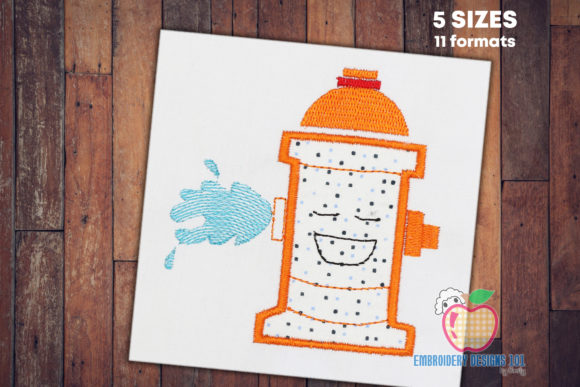
The immediate mood of the Fire Hydrant with Splashing Water is playful and energetic. The concept of a fire hydrant spraying water is inherently dynamic, and in embroidery, capturing that movement is crucial. The design relies heavily on the contrast between the solid, structured shape of the hydrant and the fluid, organic lines of the splashing water. For an embroidery project to succeed, these elements must balance each other. If the water looks too stiff, the design loses its charm. If the hydrant lacks definition, it becomes unrecognizable.
In terms of layout, this design fits naturally into the Backgrounds category because it serves as a strong focal point that can anchor a larger composition or stand alone as a statement piece. The visual personality is bold yet friendly, making it suitable for a wide range of audiences, from children’s items to quirky adult apparel. As an Etsy seller or small shop owner, you want designs that communicate their theme instantly. This design does exactly that, creating immediate recognition and emotional engagement.
Real-World Application: From Digital File to Finished Product
To truly evaluate an embroidery file, you have to imagine it stitched out. I recently considered this design for a custom order involving a canvas tote bag design. The client wanted something durable and eye-catching. The Fire Hydrant with Splashing Water worked exceptionally well here because the applique technique reduces bulk while maintaining visual impact. By using fabric for the main body of the hydrant and stitches for the water and details, the final product remained flexible and lightweight, which is essential for bags that need to be folded and stored.
Beyond tote bags, I see strong potential for this design in sweatshirt embroidery. A crewneck sweatshirt provides a large, flat surface area that allows the larger sizes of this design to shine. The splash effect adds a sense of motion that looks fantastic on the chest or back of a garment. For custom apparel, the key is choosing thread colors that pop against the fabric. A bright red hydrant with white or light blue water splashes creates a high-contrast look that draws the eye. This kind of visual clarity builds customer trust; when buyers see a crisp, well-defined image, they perceive higher value in the handmade product.
Another viable avenue is baby embroidery. Parents love whimsical themes, and a fire hydrant is a safe, non-controversial motif. However, when adapting this for baby clothes, I would recommend using the smaller hoop sizes to ensure the design remains proportional to the garment. A massive splash on a tiny onesie can look overwhelming. Scaling it down correctly ensures the personalized gift feels thoughtful and appropriately sized.
Technical Performance and Stitching Considerations
From a technical standpoint, working with an applique design requires precision. The Fire Hydrant with Splashing Water comes in five sizes, ranging from 4 inches to 8 inches, suitable for hoop sizes 4x4, 5x7, 6x10, 8x8, and 8x12. This variety is a significant advantage for designers who work with multiple machines. However, the transition between sizes must be handled carefully. In smaller sizes, fine details can get lost. I always advise testing the smallest size on scrap fabric first to check if the running stitch outlines are clear and if the fill stitch areas are dense enough to cover the fabric without gaping.
Stitch density is another critical factor. Applique designs generally have lower density than full-coverage embroidery, which is beneficial for stretchy fabrics like jersey knits used in t-shirts. However, the water splash elements likely utilize satin stitch columns. Satin stitches can pull on thin fabrics if not stabilized properly. I recommend using a cut-away stabilizer for garments that will be washed frequently, as this provides long-term support and prevents distortion. For woven fabrics like cotton twill or linen, a tear-away stabilizer might suffice, but always test first.
When working with dark fabrics, the placement of the applique fabric becomes even more important. Ensure that the fabric piece completely covers the underlying material where the hydrant sits. Any peek-through can ruin the professional look of the finished product. Additionally, consider the thread colors for the water. On dark backgrounds, a metallic or high-sheen rayon thread can mimic the reflective quality of water, adding a premium touch to the design.
Navigating Challenges and Fabric Choices
While this design is versatile, there are situations where it should be used with caution. Curved surfaces, such as caps or hats, present a challenge. The splashing water elements have irregular shapes that may not lay flat on a highly curved surface without puckering. If you plan to use this for headwear, stick to the smaller sizes and ensure you are using a cap frame and appropriate stabilizers. Similarly, textured fabrics like heavy wool or terry cloth can obscure fine details. The water splashes, which rely on clean lines for their effect, might get lost in the pile of a towel. In such cases, increasing the stitch count or simplifying the background might be necessary, though with a pre-digitized file, your best bet is to choose smoother fabrics.
For commercial embroidery projects, consistency is key. If you are producing a batch of items, ensure that your tension settings are calibrated. Variations in tension can affect how the satin stitches lay, potentially causing the water splashes to look twisted or uneven. Always run a test stitch-out on the exact fabric you intend to use for production. This step saves time and materials in the long run and ensures that every item meets your quality standards.
Enhancing Brand Value and Customer Engagement
Using high-quality design assets like the Fire Hydrant with Splashing Water can significantly enhance your brand consistency. When customers see well-executed embroidery, they associate that quality with your entire shop. This design works well for holiday embroidery themes, particularly for summer or firefighter appreciation events. It can also be adapted for embroidered patch creation, which is a popular trend among younger demographics. Patches allow customers to add the design to existing jackets or bags, expanding the utility of your small shop product line.
When marketing this item, use high-resolution photos that show the texture of the stitches. A printable mockup can help visualize the design on different products, but nothing replaces a photo of the actual stitched item. Highlight the durability and washability of the applique technique in your product descriptions. Educating your customers about the care instructions shows professionalism and helps manage expectations.
Final Designer Notes
Before integrating this design into your workflow, verify the specific file formats provided to ensure compatibility with your machine. Check the detailed stitch count and sizes mentioned in the product description to plan your hooping strategy. Remember to confirm licensing terms if you plan to sell finished items or use the design in digital embroidery file bundles. Most importantly, trust your eyes. Look at the stitch path in your software, simulate the sewing process, and make adjustments if necessary. The Fire Hydrant with Splashing Water is a strong candidate for any designer looking to add a playful, high-impact element to their design assets library. With careful attention to fabric choice and stabilization, it can become a staple in your embroidery project portfolio.